Quick Reference
| Work | Kaṃsavaho (कंसवहो) |
| Author | Rāmapaṇivāda (रामपाणिवाद) |
| Based on | Śrīmad Bhāgavatam |
| Structure | 4 cantos (sargas), 233 verses |
| Language | Mahārāṣṭrī Prākṛta (with Śaurasenī influence) |
Kaṃsavaho by Rāmapaṇivāda
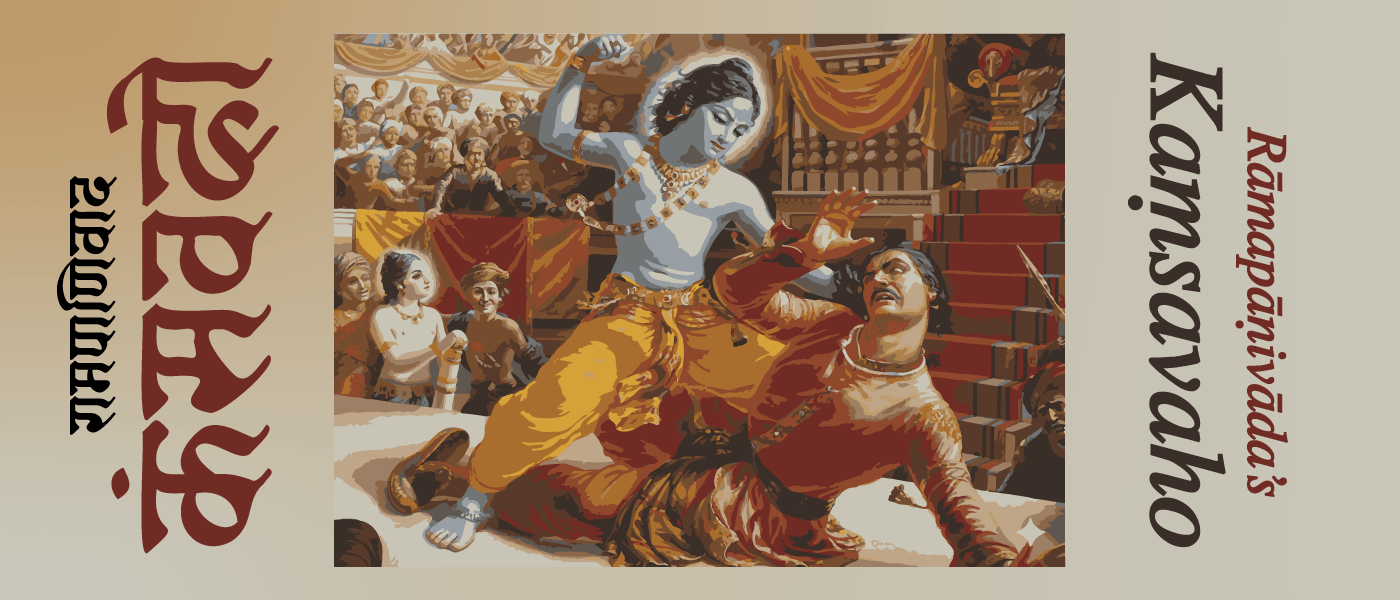
Kaṃsavaho, authored by Rāmapāṇivāda—a renowned poet who composed literature in Sanskrit, Malayalam, and Prakrit—is based on the Śrīmad Bhāgavatam. The work is divided into four cantos (sargas) and comprises 233 verses. It employs a variety of Sanskrit metres and figures of speech. Although primarily composed in Mahāraṣṭrī Prākṛta, the influence of Śaurasenī is also evident.
The first canto recounts Akrūra's arrival in Gokula and his delivery of Kaṃsa's invitation to the bow-festival in Mathurā. Though initially reluctant, Balarāma agrees to accompany Kṛṣṇa the next morning, and the canto ends with their arrival in Mathurā. The second canto narrates Kṛṣṇa's breaking of the great bow, attracting Kaṃsa's attention. In the third canto, Kṛṣṇa kills the elephant Kuvalayāpīḍa and defeats the wrestler Cāṇura, while Balarāma overcomes Muṣṭika. Kṛṣṇa ultimately slays Kaṃsa, who had planned to imprison them. The fourth canto features Akrūra recounting various episodes from the princes' childhood.